Dies ist eine alte Version des Dokuments!
Shear deformation gradient and shear rate
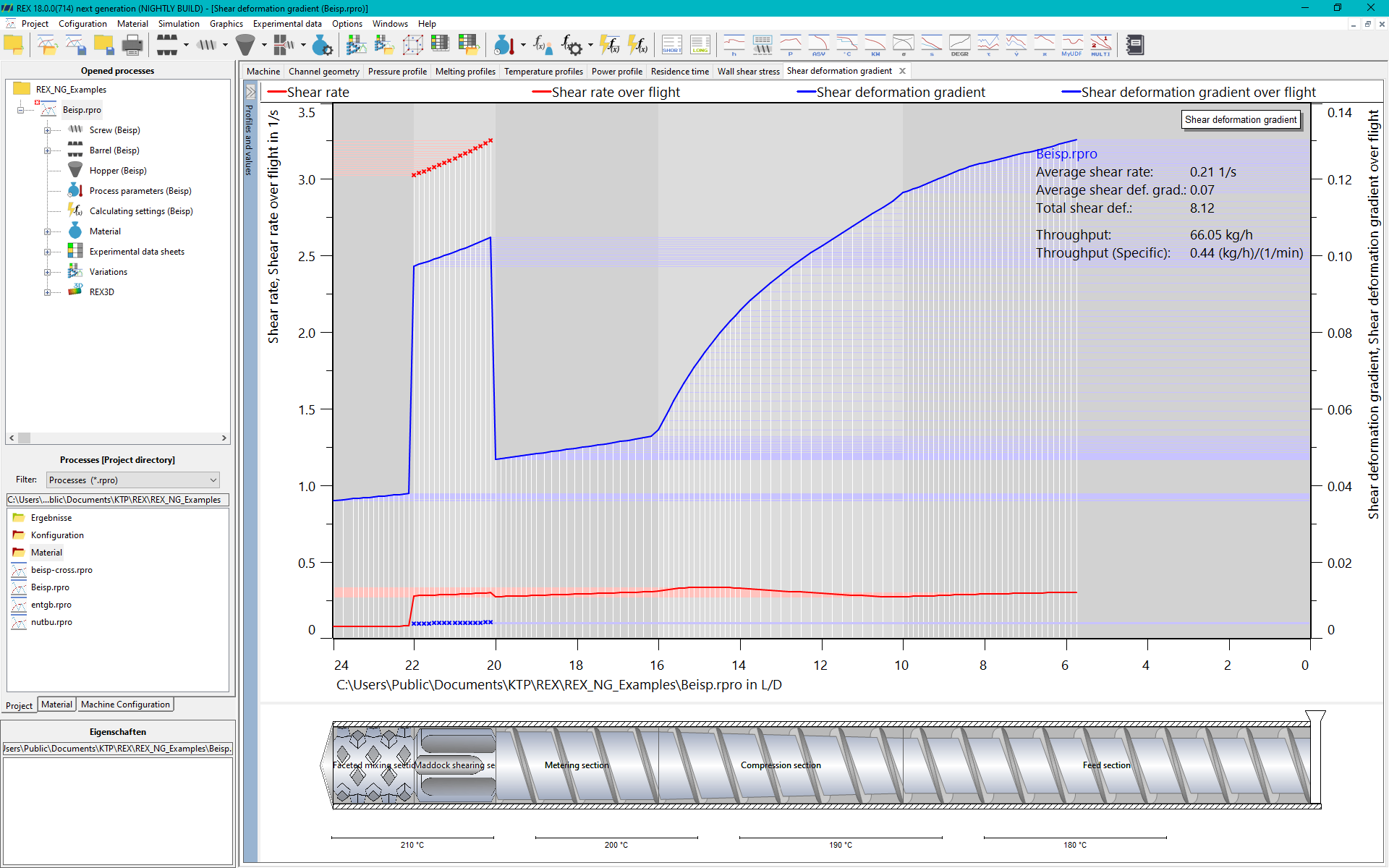
Under the menu item Graphic > Shear deformation gradient /Shear rate a detailed graphical representation of the mechanical shear stress along the length of the screw is called up. This representation shows the extent to which the material is deformed and sheared during the extrusion process by the mechanical movement of the screw. Shear rate and shear deformation gradient are decisive variables that have a direct influence on the quality of the melt, the homogeneity and the thermal stress of the material.
Shear rate
The shear rate describes the relative movement of the material in the screw flight. It is one of the most important variables in the plasticising process, as it largely determines the shear energy that acts on the material.
- Shear rate over the screw length: The solid lines in the graph represent the shear rate along the entire length of the screw. These show how the shear rate develops in different areas of the screw and where the strongest mechanical stresses occur.
- Typically, the shear rate increases in zones with increased compression or narrow screw flights, where the material is subjected to greater stress. In zones with a wider flight width or lower compression, the shear rate can decrease.
Shear deformation gradient
The shear deformation gradient is a physical quantity that describes the rate of material deformation, i.e. how much the material is deformed by the mechanical forces. This variable provides information on how the material is stretched or compressed by the screw rotation and is decisive for the mechanical mixing and homogenisation of the melt.
Maddock shear section
Special attention is paid to the dashed lines, which represent the shear deformation gradient and the shear rate across the web of a Maddock shear section. The Maddock shear section is a special component within the screw geometry that ensures particularly intensive shearing and homogenisation of the material. In these areas, the material and the melt are specifically deformed in order to achieve optimum mixing and melting.
Meaning of the visualisation
The representation of the shear rate and the shear deformation gradient along the length of the screw provides important information about the mechanical stress on the material during the plasticising process. In particular, the analysis via the Maddock shear section shows how much the material is deformed in order to obtain a homogeneous melt. This information is particularly valuable for
- Optimising melt quality: High shear rates and deformation gradients in certain zones can lead to better homogenisation of the material, which improves the quality of the end product.
- Avoid thermal overloads: Excessive shear rates or excessive mechanical stress can lead to overheating of the material. Careful monitoring of the shear rate and the shear deformation gradient helps to avoid thermal damage to the material.
- Adjusting the screw geometry: The graphical representation provides valuable insight into the screw performance. By analysing the shear forces, targeted adjustments can be made to the screw geometry to improve the material flow and increase process stability.